The balustrade is what gives a staircase its character. Four parts do most of the work: newel posts, handrails, baserails and spindles. They need to look right together and fit together, so it pays to choose them as a set. This guide explains your options and how to decide.
Start with the style of your home
Pick a direction first, then the parts follow.
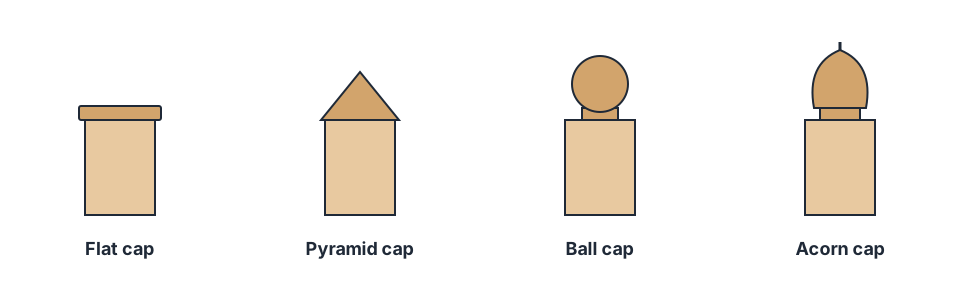
- Traditional: turned or chamfered newel posts, ball or acorn caps, colonial or Georgian spindles.
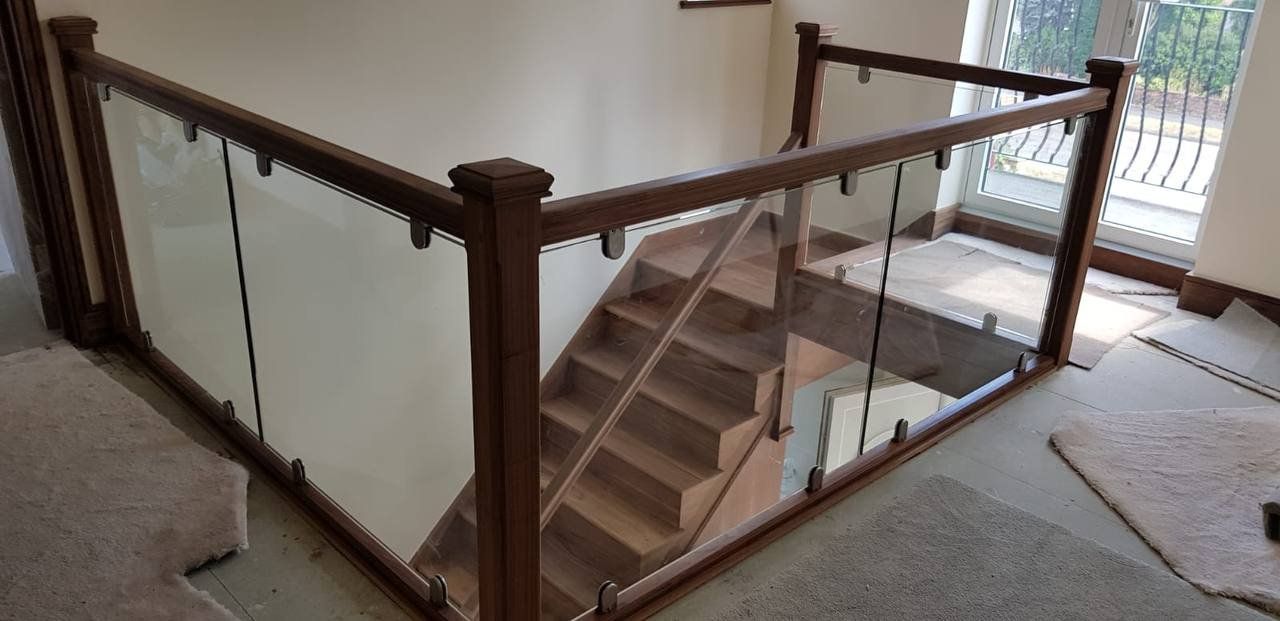
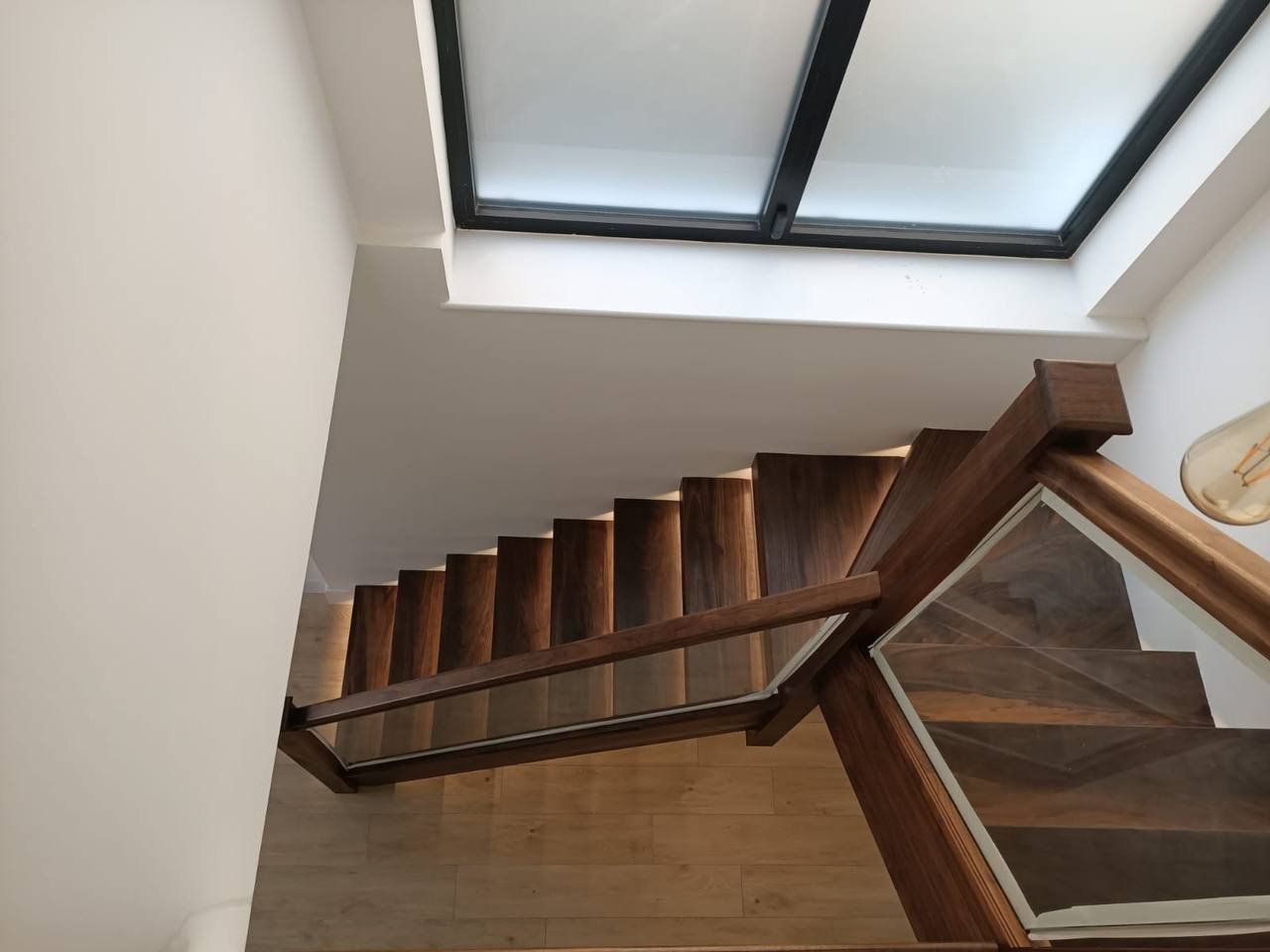
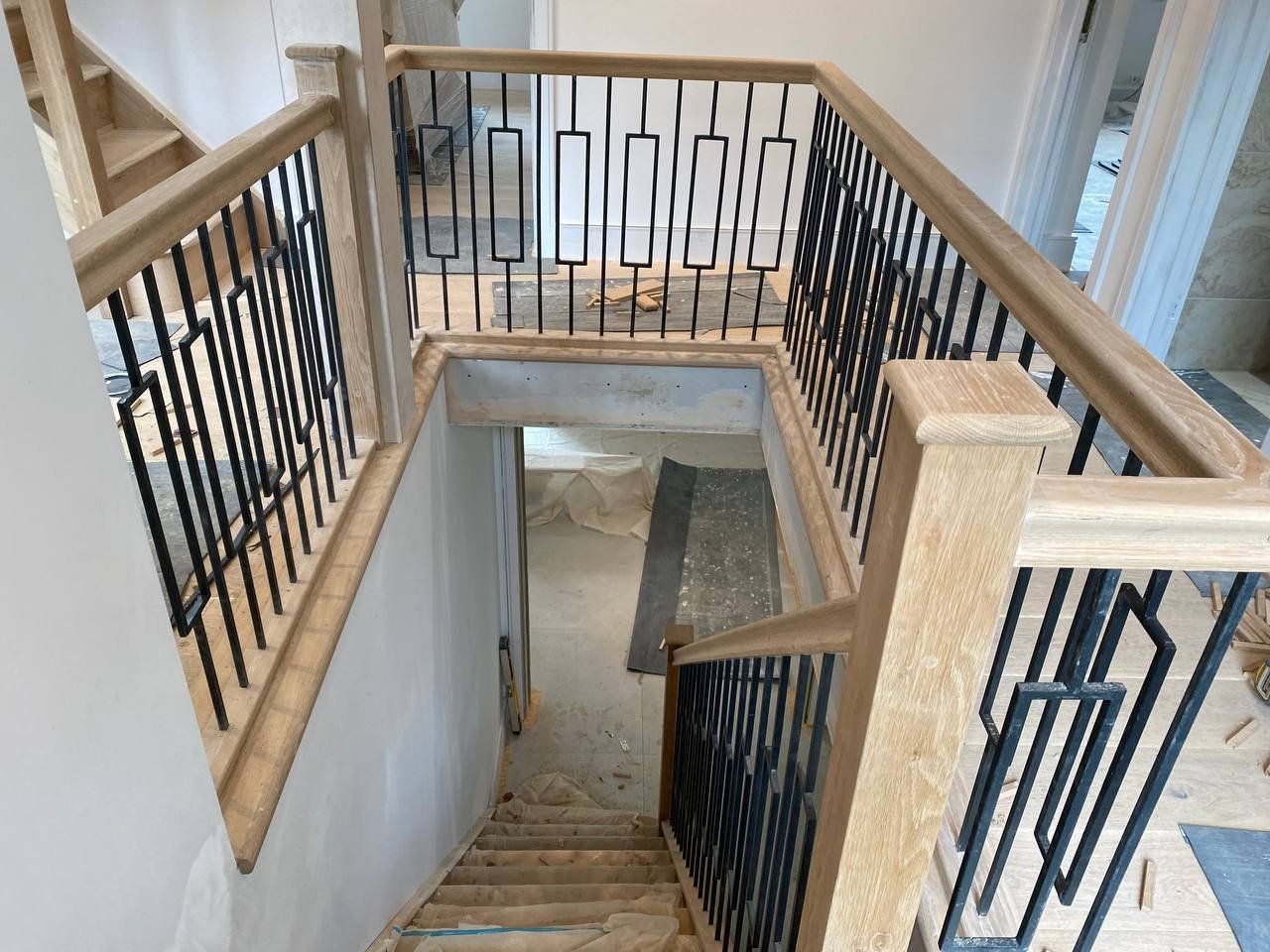
- Contemporary: square posts, flat or shadow caps, square spindles or black metal balusters.
- Painted: primed pine posts, rails and spindles, finished in the colour of your choice.
Newel posts
Newel posts anchor the whole balustrade, so choose them first.
- Square posts are clean and modern. They come in 90mm and 115mm sizes.
- Chamfered posts have bevelled corners for a softer, more traditional look.
- Turned posts have a shaped, decorative section. We offer turned posts for the main stair, for winders and for quarter landings.
In the designer, you choose between a full-height square post, a full-height chamfered post and a turning post, and you can switch individual posts on or off.
Newel caps
The cap finishes the post. Match the cap size to the post: our caps are made for 90mm or 115mm posts, with double caps for wider 90mm x 180mm posts.
Handrails
The handrail is the part you touch every time you use the stairs, so comfort matters. We offer the modern profile and the HDR profile in pine and oak. Hold a sample if you can: some people prefer a rounder rail, others a flatter one. For the wall side, a wall-mounted handrail (we stock a pig’s ear profile) fixes straight to the wall.
Handrail checks
- The top of the rail should sit between 900mm and 1,000mm above the pitch line.
- It should be continuous, and easy to grip.
- Wider stairs need a handrail on both sides. See our regulations guide.
Baserails
The baserail runs along the bottom of the balustrade and holds the spindles in place. There are two profiles: the HDR profile (63mm x 28mm) and a rectangular profile (56mm x 28mm). Choose the one that sits well with your handrail style, and use the same wood as the handrail for a matched look.
Spindles
Spindles fill the gap between baserail and handrail. They come in several sizes and styles:
- 32mm or 41mm: the width of the spindle. 41mm is the bolder, chunkier choice and 32mm is slimmer and lighter.
- Plain (square or blank), chamfered, colonial, Georgian or decorative twist: from simple to ornate.
- Black metal balusters: square, oval and rectangular sections that give a sharp, contemporary look.
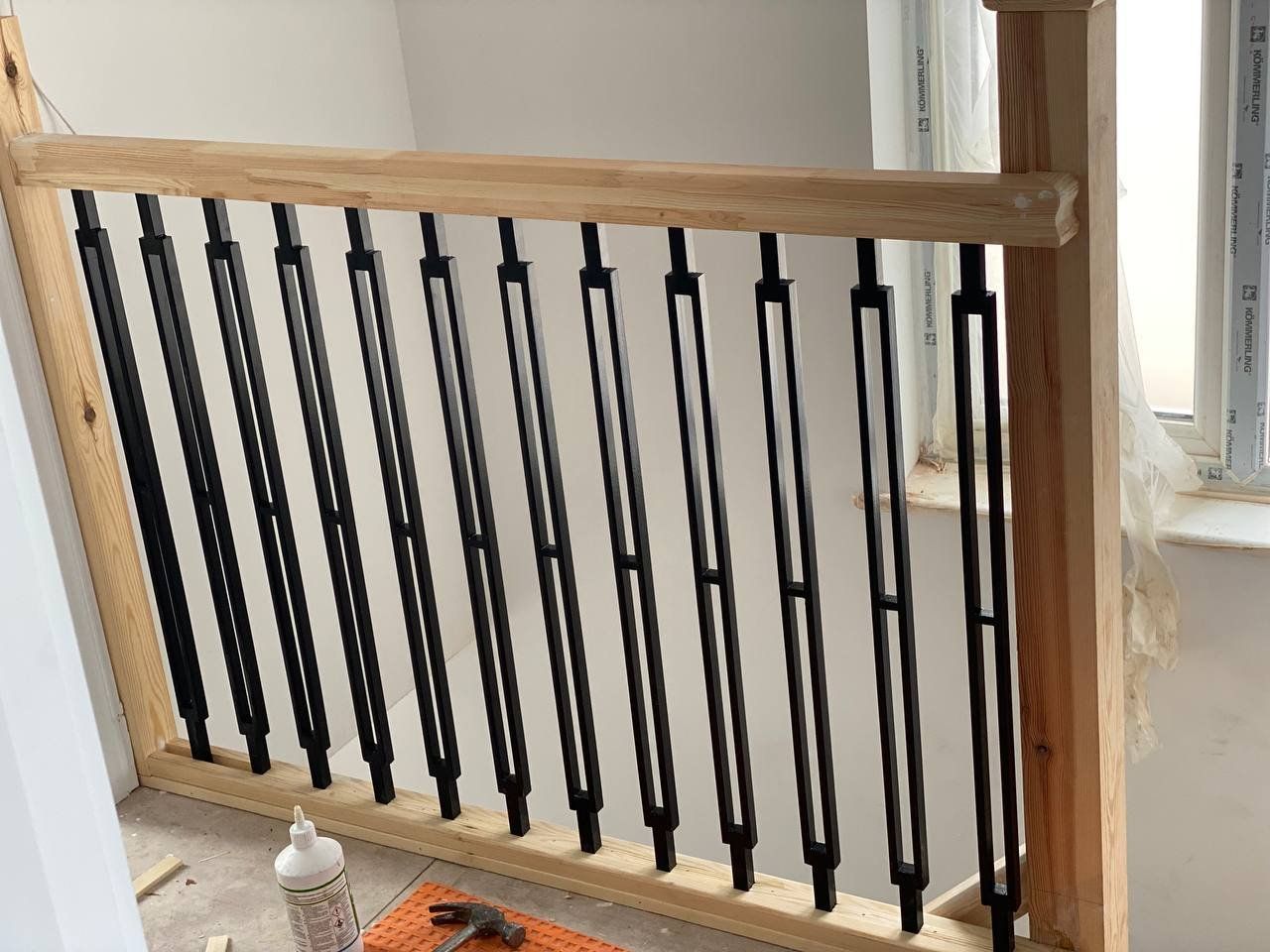
Whatever you choose, the gap between spindles must stay below 100mm. The designer works out the number and spacing for you, so you do not need to calculate it.
Choosing the wood
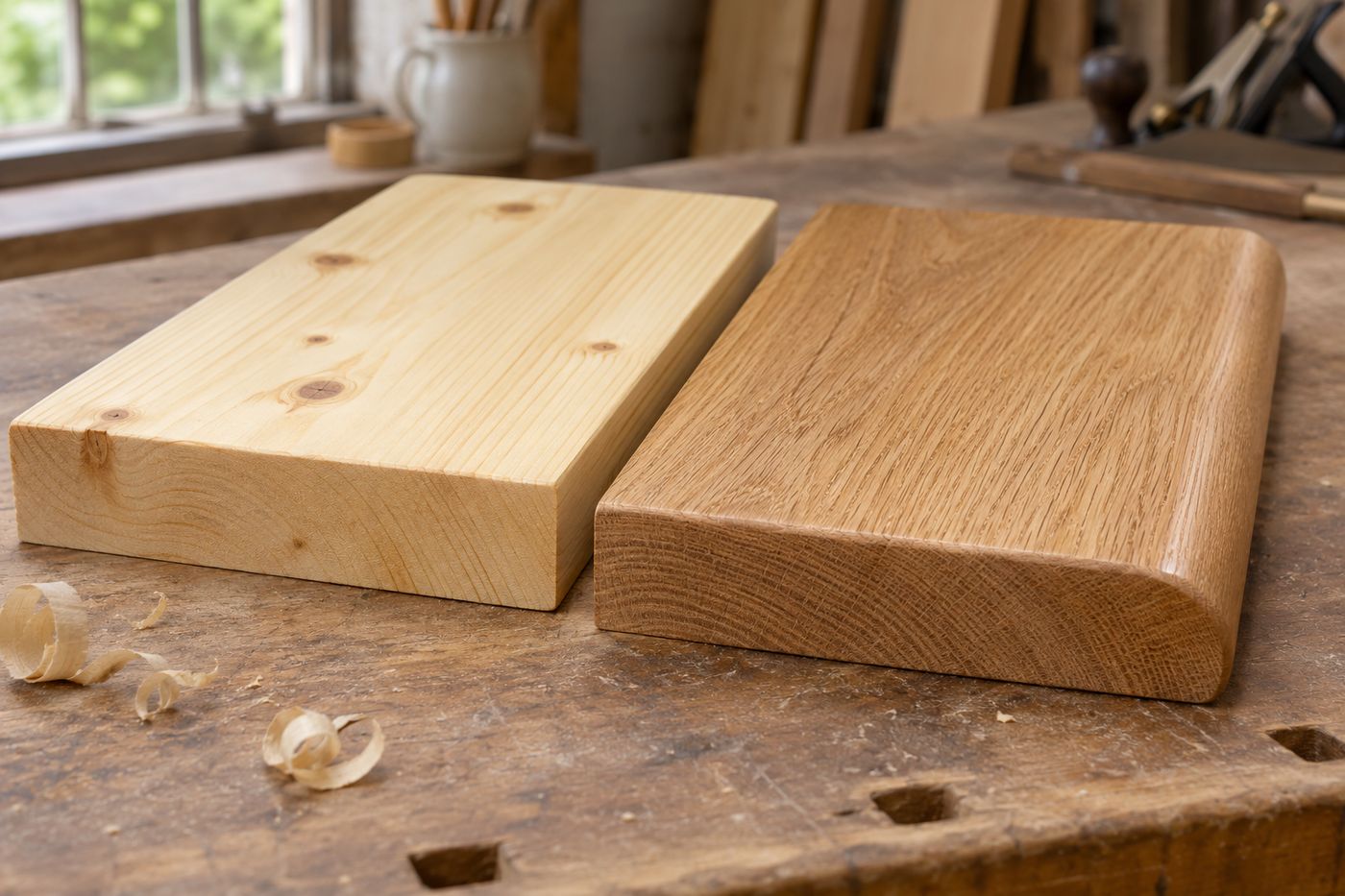
Use the same wood for the posts, handrail and baserail so they match when stained or oiled. Spindles can be the same wood or a contrast, such as black metal against oak. If you plan to paint, choose primed pine. Our guide to pine vs oak staircases compares the two woods.
How the parts fit together
- Newel posts are fixed at the foot, top and every turn.
- Handrail runs between the posts.
- Baserail runs between the posts along the stairs.
- Spindles fit between handrail and baserail.
You can choose to build the balustrade with newel posts only, with handrail only, or with handrail and baserail together. You can also have the handrail and baserail supplied oversized, to be cut to the angle on site.
Common mistakes
- Mixing post, rail and spindle widths that look out of proportion, such as slim spindles on huge posts
- Forgetting that caps must match the post size
- Choosing a handrail that is too bulky to grip comfortably
- Mixing species that will not match under oil or stain
Measuring for replacement parts
If you are replacing parts on an existing staircase rather than building a new one, measure before you order:
- Posts: the width of the post and its overall height, plus the size of any cap fitted.
- Handrails: the length between posts along the slope, and the profile.
- Spindles: the width of the spindle and the gap from baserail to handrail.
- Baserails: the length and the section size, such as 63mm x 28mm.
Photographs help if you are unsure what you have, and we are happy to look at them.
Proportions that look right
Parts that suit each other look calmer. As a rule of thumb, pair chunky 115mm posts with 41mm spindles and a full-size handrail, and slim 90mm posts with 32mm spindles. Keep the style of the caps consistent with the posts, so a ball cap goes on a turned post and a flat cap on a square one.
Frequently asked questions
Can I replace just the spindles?
Yes, as long as the new spindles are the same length and size. Measure the gap between the baserail and the handrail first.
Do I need a baserail?
If you want spindles, yes. The baserail is where the spindles are fixed. A design can also use a handrail on its own or newel posts only.
Which parts are easiest to change later?
Newel caps and spindles are the simplest to swap. Posts and rails are structural, so they are better chosen carefully at the start.
Key points
- Choose the style of your home first, then the parts.
- Match cap size to post size.
- Keep the gap between spindles below 100mm.
- Handrail height should be 900mm to 1,000mm.
Build it and see. Pick styles in the Posts & Balustrades section of the 3D Staircroft designer and see them on your own staircase. Or buy individual parts from the shop: spindles, handrails, newel posts, caps and baserails.