The shape of your staircase is decided by the space you have, where the stairs need to arrive, and how you want them to look. Almost every domestic staircase falls into one of three groups: straight, winder or landing. This guide explains each one so you can pick the layout that fits your home.
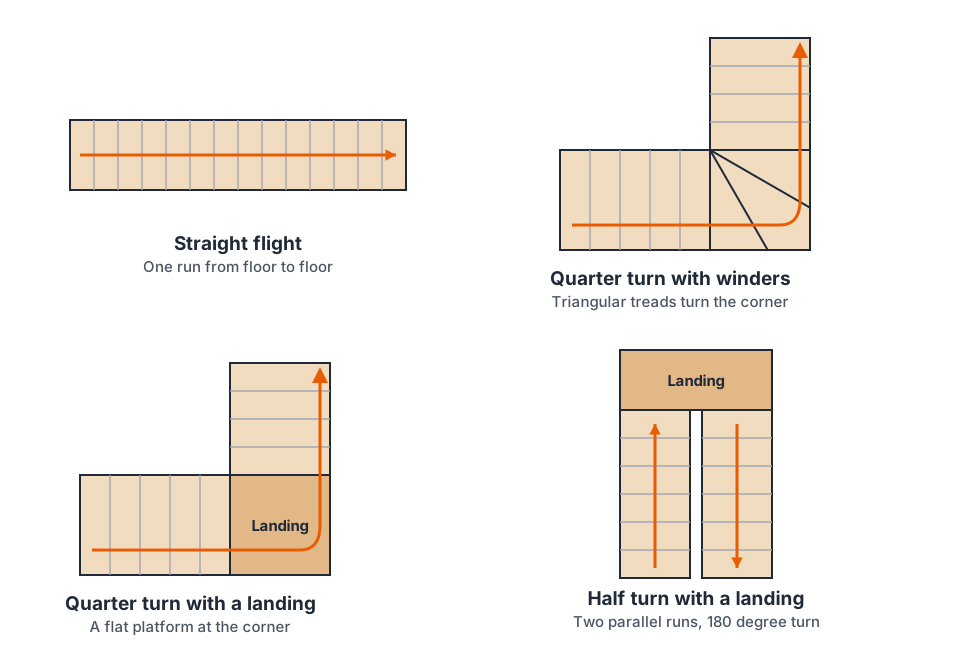
Straight staircases
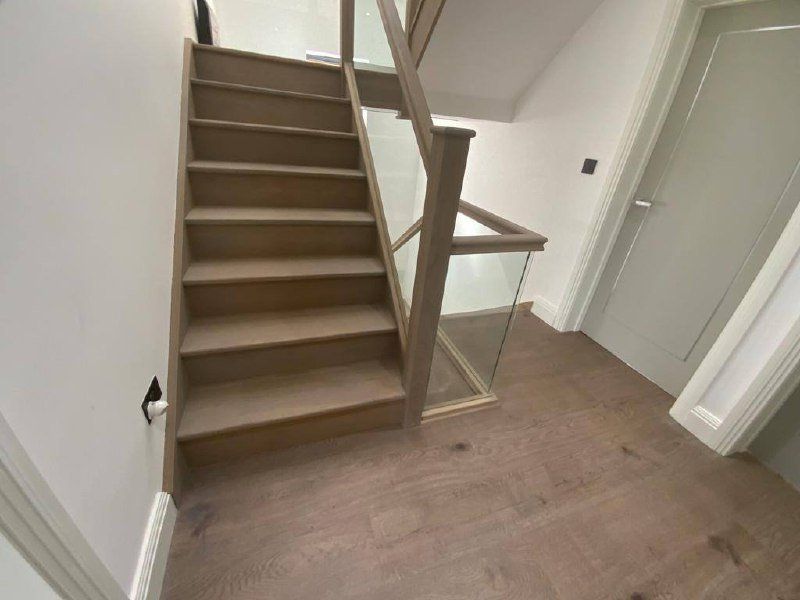
A straight staircase is a single flight from bottom to top. It is the simplest layout, the easiest to build and the easiest to climb, which is why it is so common in terraced and semi-detached houses.
Good for
- Hallways with a clear run of floor in front of the stairs
- Anyone who wants the most straightforward build and fitting
- Moving large furniture up and down
Watch out for
A straight flight needs the most length. As a rough guide, a flight of 13 risers with a 250mm going needs about three metres of floor length. If you do not have that space, a turn will save length.
Winder staircases
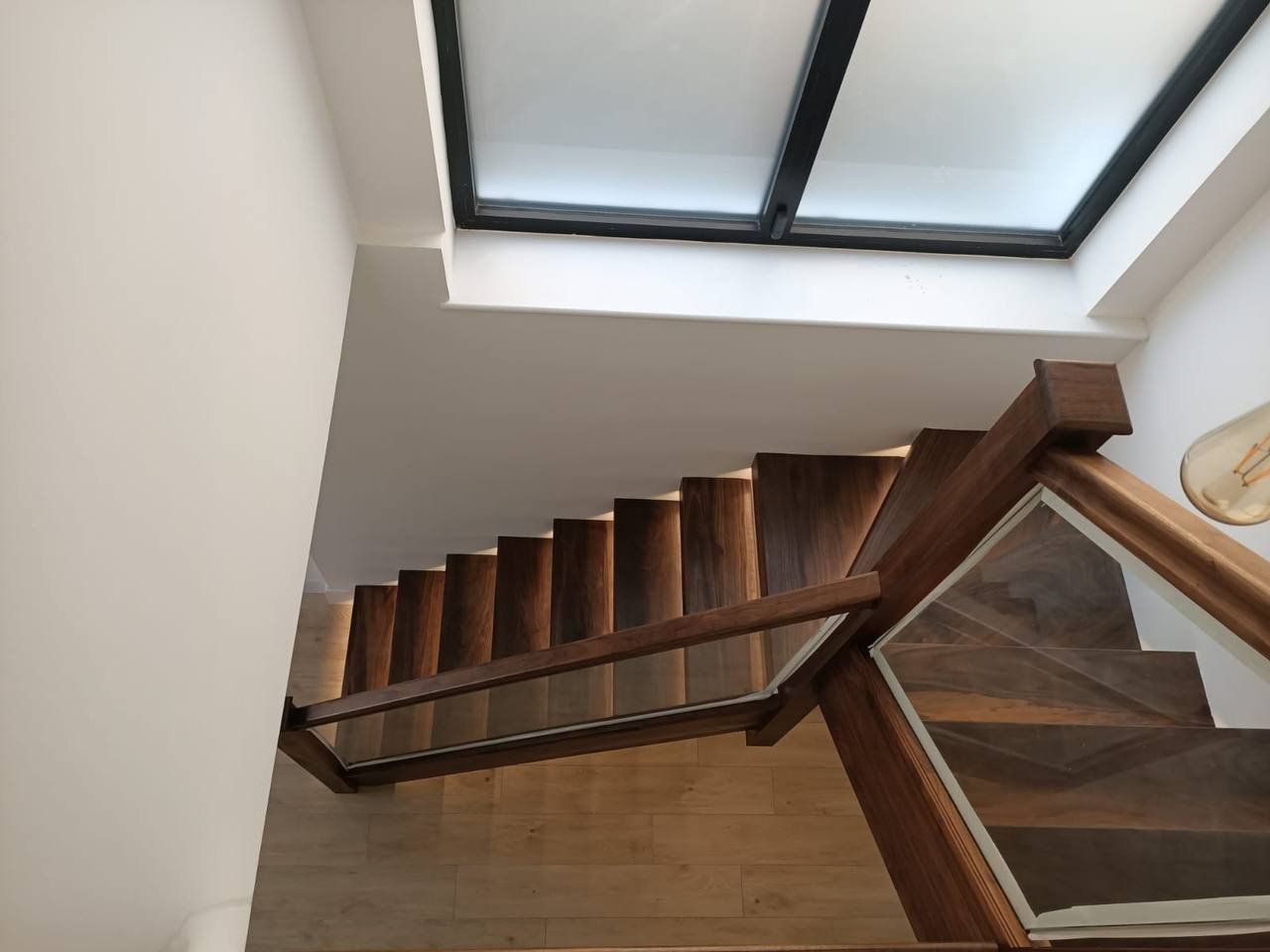
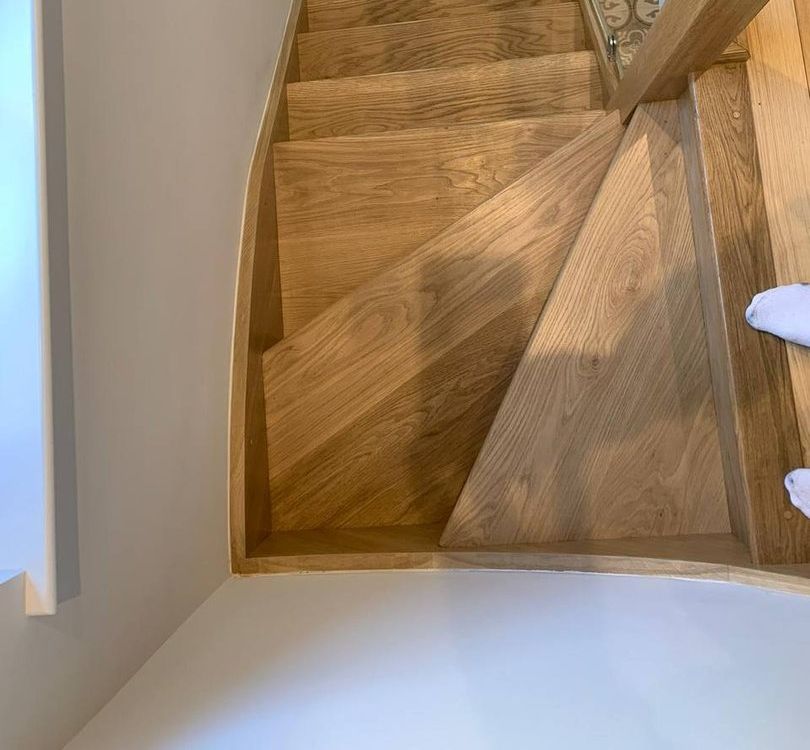
A winder uses tapered treads to turn a corner, usually through 90 degrees, without a flat landing. In the 3D Staircroft designer you can choose two winders or three winders for a quarter turn. Three winders give a gentler turn because each tread turns through a smaller angle.
Good for
- Tight spaces where a landing will not fit
- Turning a corner in a small footprint
- Staircases that run along two walls
Watch out for
Winder treads are narrow at the inner corner, so the step you stand on is not the same width all the way across. Building regulations measure the going at the centre line of a winder, and some people find them less comfortable than a flat landing, especially with small children or limited mobility. Get the turn right at the design stage, because winders have more rules than straight steps. Our regulations guide covers the main ones.
Landing staircases
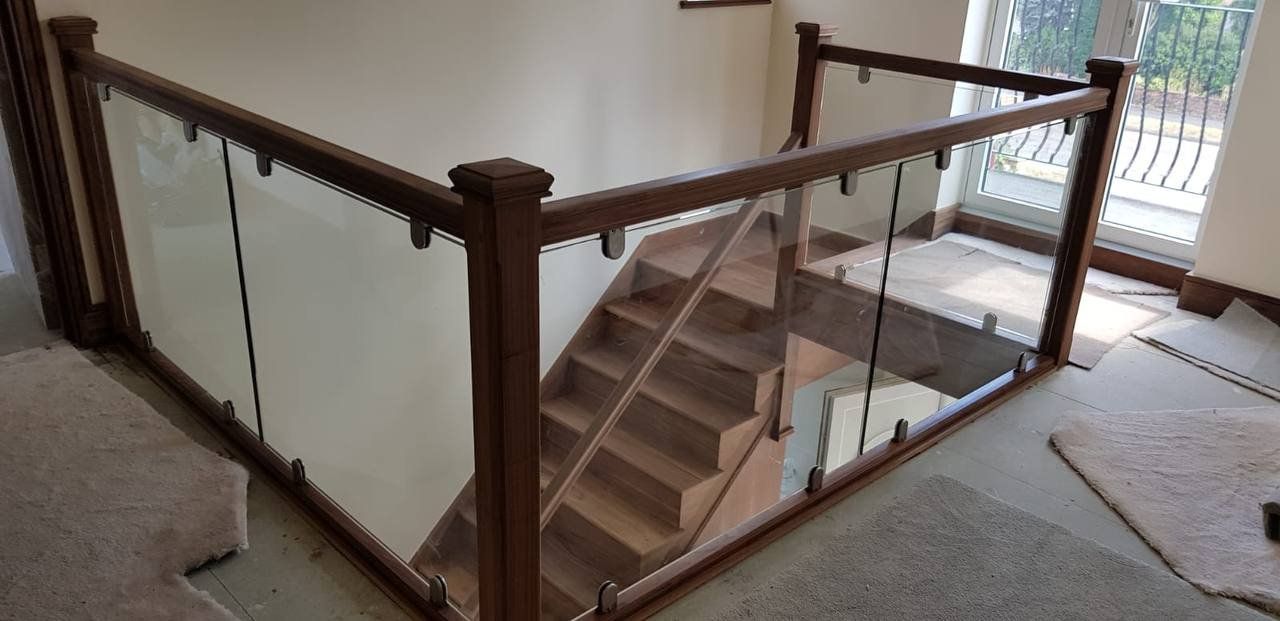
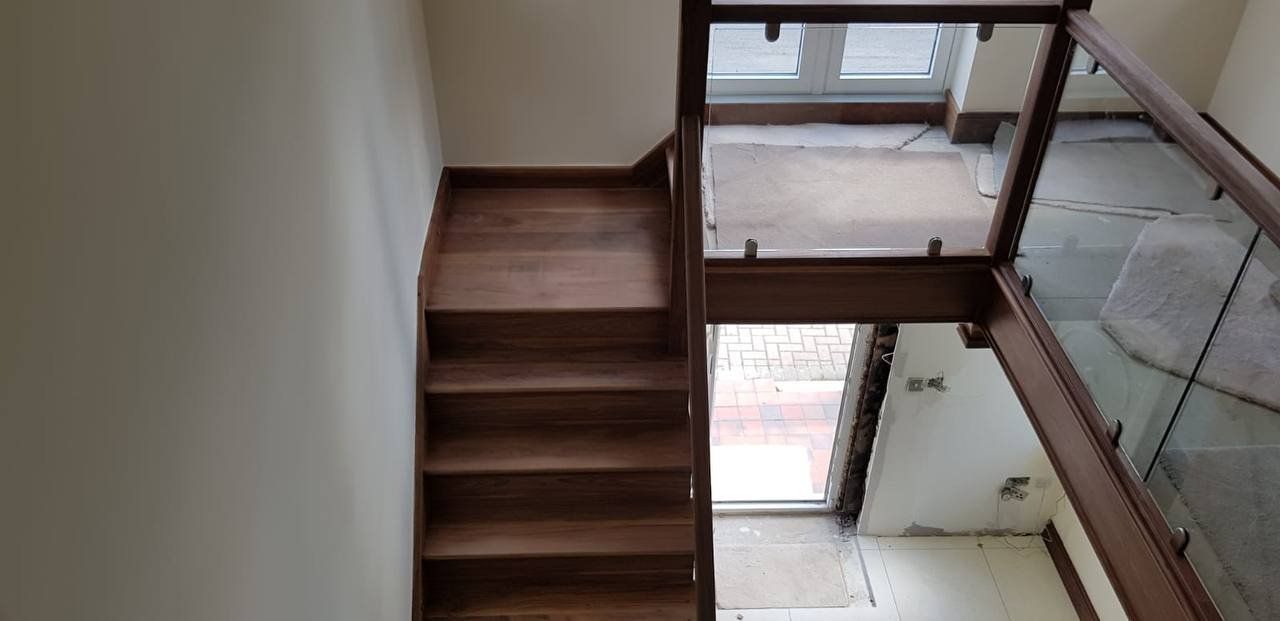
A landing is a flat platform part-way up the stairs. It gives you a place to pause, and it lets the stairs change direction cleanly. There are two common forms:
- Quarter landing (90 degrees): the stairs turn a corner at a square landing.
- Half landing (180 degrees): the stairs climb to a landing, turn back on themselves and continue in the opposite direction. This is the classic U-shaped or dog-leg staircase.
Good for
- Long climbs, such as high ceilings, where a single flight would be very long
- Homes with space for a platform and a change of direction
- A more generous, traditional look
Watch out for
Landings need floor area. In the designer, a half landing includes a note that we do not supply the landing floor itself, so your builder will need to frame and floor it. Also remember that every flight on each side of a landing needs its own handrail and balustrade.
Comparing the three
| Layout | Floor space | Comfort | Best suited to |
|---|---|---|---|
| Straight | Needs the most length | Most comfortable | Open hallways |
| Winder | Smallest footprint | Good, but narrower treads at the corner | Tight corners |
| Landing | Needs a platform | Very comfortable, with a rest point | Long climbs and generous spaces |
Other design choices
Whichever layout you pick, a few other decisions shape the look:
- Open or closed risers. Open risers feel lighter, closed risers feel traditional.
- Feature steps. A bullnose or curtail step at the bottom is a statement.
- Balustrade style. Wooden spindles, black metal balusters or glass all suit different homes. See how to choose handrails, baserails, newel posts and spindles.
- Wood. Pine for painting, oak for a natural finish. Pine vs oak staircases compares them.
You can combine turns, too. The designer lets you add one or more corners to the same staircase, and it updates the straight treads automatically as you edit each turn. If your space needs a curved or spiral stair, contact us to discuss it, because the online designer covers straight flights with winders and landings.
How to choose: five questions
- How much floor length do I have? If you can fit a straight flight, it is usually the simplest option.
- Where do the stairs need to arrive? If the top of the stairs must face a different direction, you need a turn.
- Is there room for a landing? A landing needs a square or rectangular platform. If not, consider winders.
- Who will use the stairs? For young children, older relatives or people with limited mobility, a landing is the more forgiving turn.
- What will you carry up them? Large furniture is easiest on a straight flight or a landing.
Frequently asked questions
Can I change my mind after designing in 3D?
Yes. You can switch a turn from winders to a landing, or remove it, and the designer redraws the staircase straight away. Compare the price and floor space each time.
Can a staircase have more than one turn?
Yes. You can add several turns, as long as the space and the regulations allow it.
Key points
- Straight stairs are simplest but need the most length.
- Winders save space but have narrower treads at the inside corner.
- Landings add comfort and a change of direction, and need floor area.
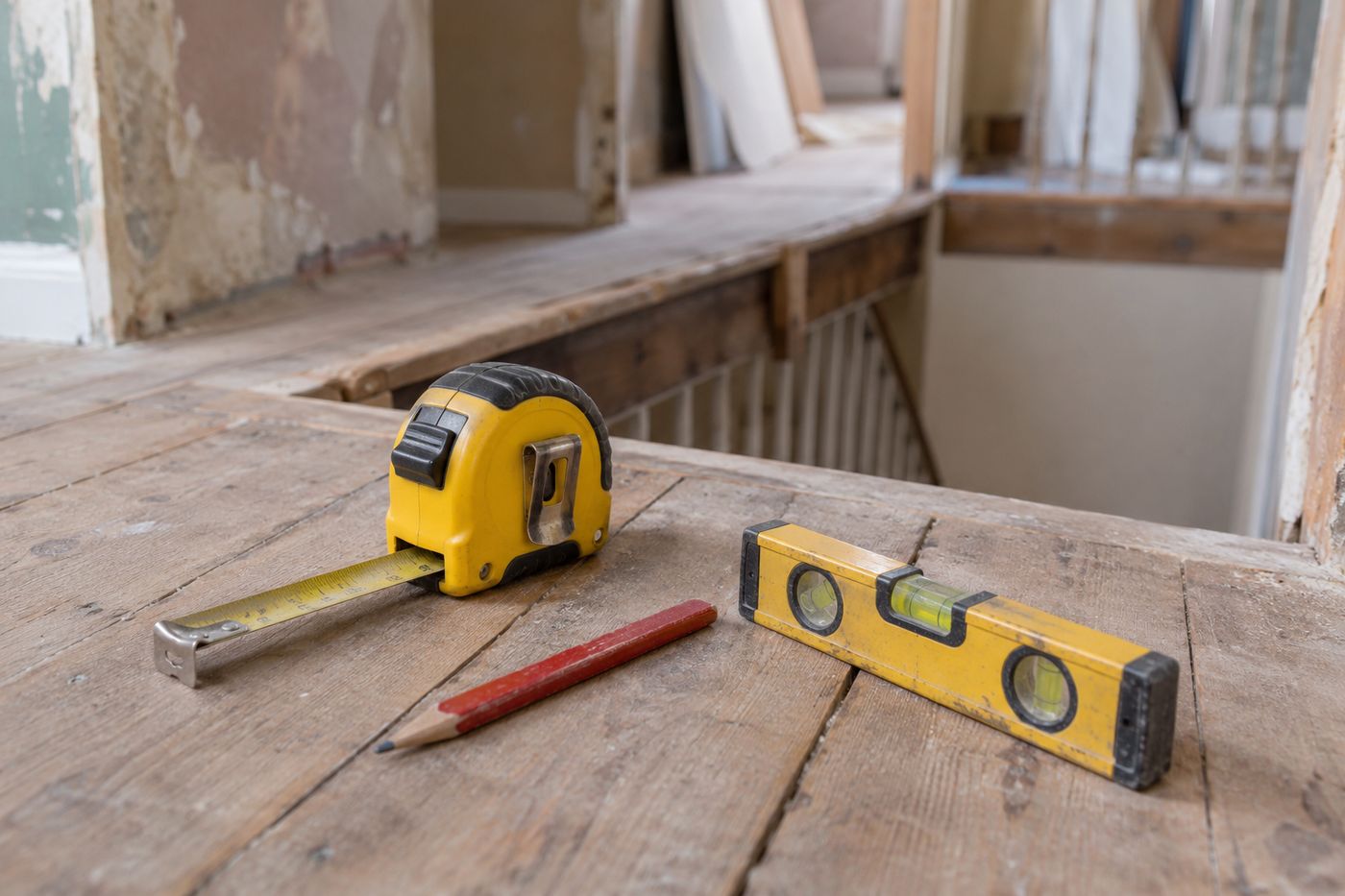
- Measure your space first, then test layouts in the designer.
Try each layout. Open the 3D Staircroft designer and use Turn Configuration to switch between straight, winder and landing versions, then compare them in 2D and 3D. For ideas, browse our project gallery.