A wooden staircase is built to last for decades, and a little regular care keeps it looking its best. Most of the work is gentle cleaning and the occasional check of the fixings. This guide covers what to do and how often.
Everyday care
- Dust and vacuum the treads regularly. Grit works like sandpaper on a wood finish.
- Wipe up spills straight away, particularly on oiled wood, which can mark.
- Use a barely damp cloth, well wrung out, for a deeper clean. Never soak wood or use a steam cleaner.
- Take care with shoes. Stiletto heels and gritty soles do the most damage to treads.
Cleaning by finish
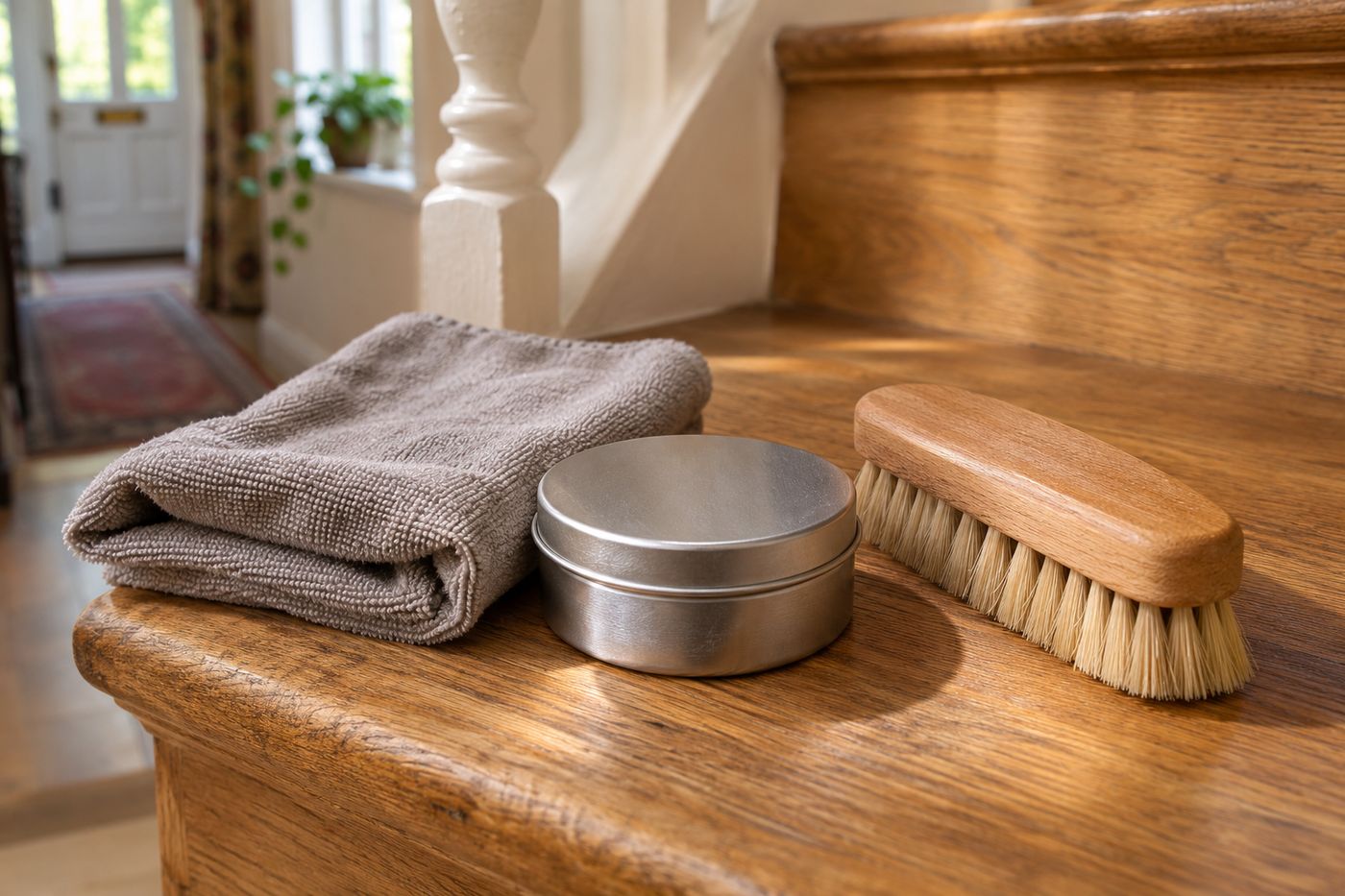
Oiled or waxed wood
Use a cleaner made for oiled wood, or a lightly damp cloth, and avoid harsh chemicals that strip the oil. When the wood begins to look dry or dull, apply a fresh coat of the same type of oil or wax. How often depends on traffic, but a busy hallway needs it more often than a landing.
Lacquered or varnished wood
Lacquer forms a protective film, so keep cleaning gentle. Use a soft cloth and a mild wood cleaner. Do not wax a lacquered surface, because the wax will not soak in and leaves it patchy.
Painted pine and MDF
Wipe with a damp cloth and a drop of mild washing-up liquid, then dry. Keep a small pot of the paint for touch-ups, as the edges of treads and the nosings tend to chip first.
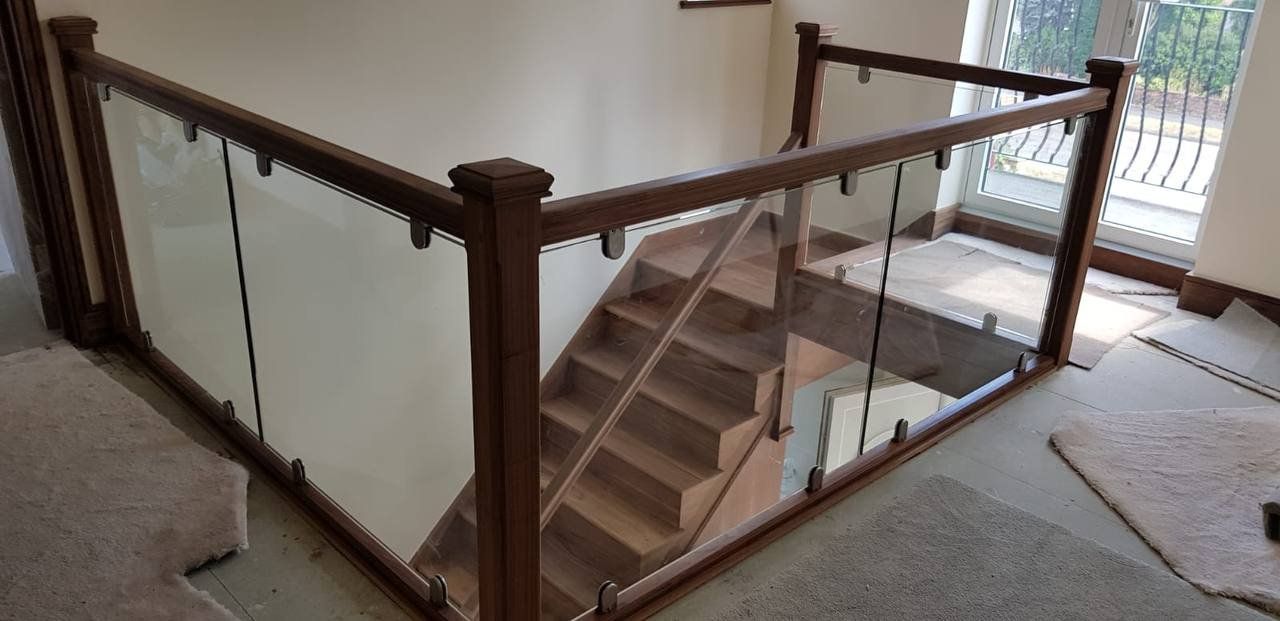
Glass balustrades and metal spindles
Use a standard glass cleaner on glass and a soft cloth on metal. Avoid abrasive pads.
Protect the wood
- Stair runners and mats protect treads in high-traffic homes. Make sure they are fixed securely so they do not slip.
- Keep sunlight in check. Direct sun can lighten or darken wood over time. Curtains or blinds near a bright stairwell help.
- Keep humidity steady. Wood expands and shrinks with the air. A stable room, roughly between 40% and 60% humidity, reduces gaps and squeaks.
- Use soft feet on anything that touches the wood, and avoid dragging heavy items.
Annual check
Once or twice a year, go over the whole staircase:
- Push each newel post firmly. It should not move.
- Check the handrail for movement, and look at the fixings.
- Look at the spindles and baserail for loose or cracked parts.
- Walk the stairs and listen for squeaks.
- Look for worn finish on treads and nosings.
Fixing common problems
Squeaky stairs
Squeaks happen when two pieces of wood rub together. If you can reach the underside of the staircase, check the fixings and add glue blocks or screws where a tread has loosened. From above, a fine powder lubricant worked into the joint can quieten a minor squeak. For a persistent noise, ask a joiner to look at it.
Loose newel post
A loose post affects the whole balustrade, which is a safety concern. Check the fixings at the base. If you cannot tighten it securely, ask a joiner. Do not ignore it, because the handrail must resist leaning.
Scratches and dents
Light scratches in oiled wood can often be buffed out and re-oiled locally. In a lacquered finish, a touch-up kit in a matching shade helps. Deep dents may need a joiner.
Water marks and stains
Act early. Wipe the mark, let the wood dry, and if it remains, lightly sand and re-finish the area. Oak can darken when it meets water and iron, so wipe any wet metal items off the wood.
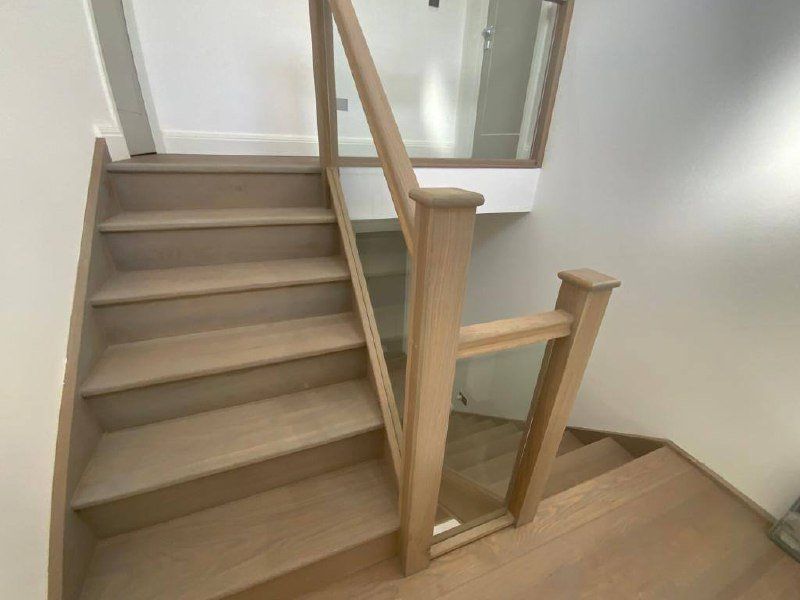
Carpeted and runner-covered stairs
If your treads are carpeted, vacuum the carpet and the edges of the stairs regularly, and check that the gripper rods and fixings are secure. Lift a corner now and then to look at the wood beneath for damp or wear.
Refreshing worn treads
Treads wear first on the nosing and along the centre of the step. When the finish is worn, you can usually refresh it rather than replace the stair:
- Clean the tread thoroughly and let it dry.
- Lightly sand the worn area along the grain, then remove the dust.
- Apply the same finish as before in thin coats, following the maker’s instructions.
- Let it cure fully before using the stairs normally.
Test any product on a hidden area first, and keep the stairs clear while the finish dries.
Care by wood
Oak is hard and forgiving, and regular oiling keeps it rich. Pine is softer, so it marks sooner, and painted pine benefits from a quick touch-up. See pine vs oak staircases for the differences.
A simple routine
| How often | What to do |
|---|---|
| Weekly | Vacuum or dust treads, wipe the handrail |
| Monthly | Clean with a barely damp cloth, wipe glass and metal |
| Twice a year | Check newel posts, handrails and spindles for movement |
| When it looks dry or worn | Re-oil, re-wax or touch up the paint |
What to avoid
- Bleach, ammonia and strong solvents
- Soaking the wood or using a steam mop
- Silicone polishes, which can leave a film and make recoating difficult
- Waxing a lacquered surface
- Sliding furniture across the treads
Key points
- Dust often, clean with a barely damp cloth and never soak the wood.
- Match the product to the finish: oil, lacquer or paint.
- Check newel posts and handrails once or twice a year.
- Fix loose parts early.
Need a replacement part? Newel posts, caps, handrails, baserails and spindles are available in the shop. For advice on a repair or refit, call 07826030047 or email info@stairvista.co.uk. Planning a whole new staircase? Try the 3D Staircroft designer.